


By Andy Syms, national sales manager, HOPPE (UK)
Door hardware may feel like a small consideration in an entire doorset, but its role in fire safety, security and accessibility is huge. Components such as handles, locks, closers and hinges take constant wear – and any failure can compromise building compliance in an instant.
Most hardware issues stem from poor installation, inappropriate product choice or overlooked maintenance. However, these problems are entirely avoidable with the right approach.
Installation: where many problems begin
Poor alignment, incorrect fixings or the wrong product for the door’s category of use are all frequent culprits.
Locks that don’t latch properly, handles that work loose within months, or closers that slam or refuse to latch are more often the result of installation errors than manufacturing defects.
According to the BS EN 1906 standard for lever handles and knob furniture, different categories of use are designed to cope with very different levels of traffic and abuse.
For example, a Grade 4 handle for a stadium will withstand far more than a Grade 1 product for a light-use internal door. Installing the wrong grade is setting the door up for early failure.
On fire doors, the stakes are even higher. Every hinge, closer and lock must be compatible with the door’s fire test evidence and fitted exactly as tested. A minor deviation at installation can invalidate certification.
To mitigate risks early on, it is crucial to use the manufacturer’s templates and fixings and check alignment before final tightening; even a few millimetres off can cause binding against seals.
For fire doors, all components must match the door’s fire test evidence and CE/UKCA marking.
Finally, the door should be fully tested before sign-off, including latch engagement against any smoke or draught seals.
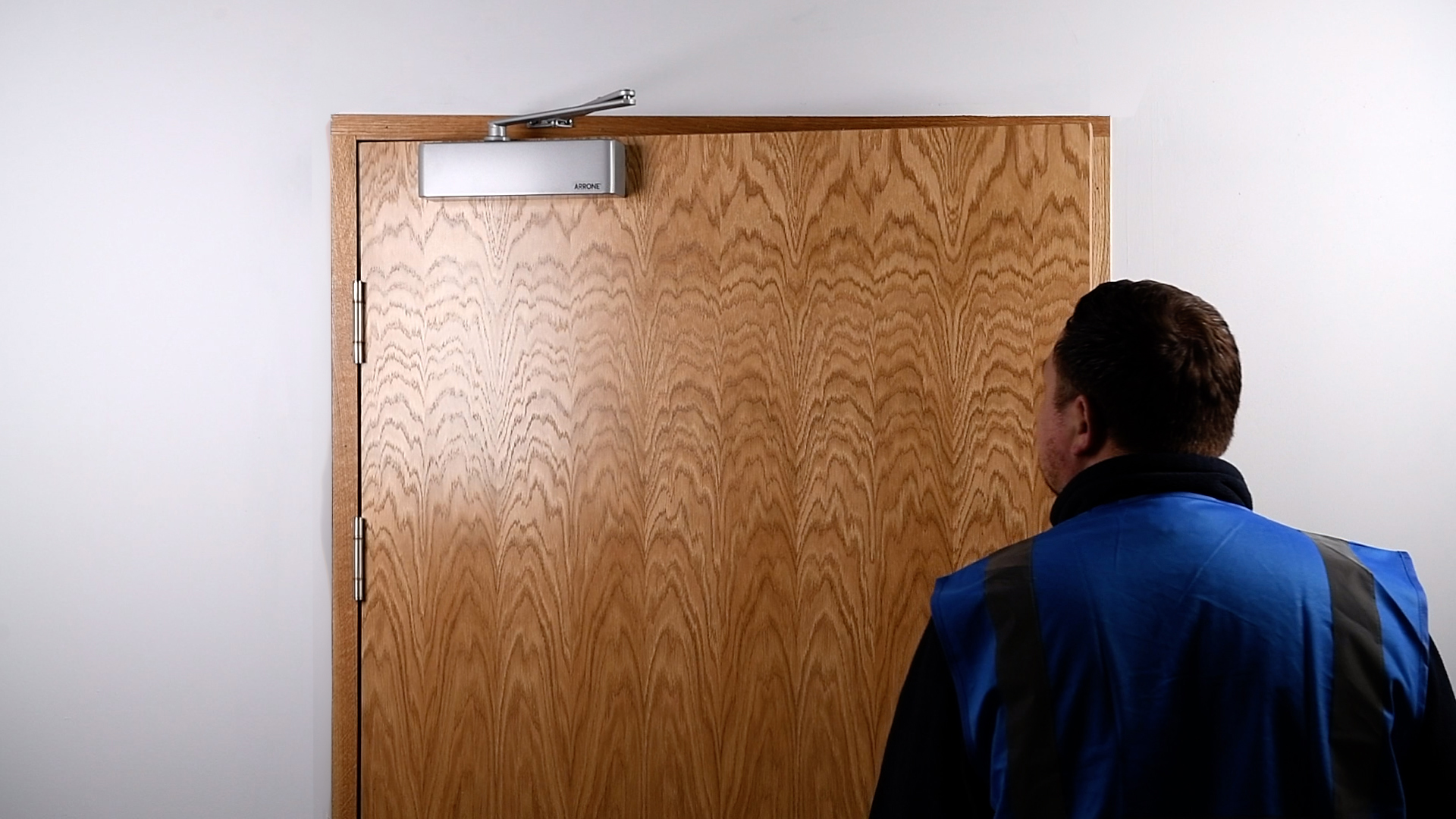
Arrone AR1500 Door Closer
Maintenance: the most overlooked safeguard
Once in place, hardware is often ignored until it breaks. Yet regular maintenance is not just good practice – it is a legal requirement.
As per the Regulatory Reform (Fire Safety) Order 2005, the responsible person must ensure that a maintenance routine is undertaken and logged for all architectural ironmongery.
The Guild of Architectural Ironmongers (GAI) recommends monthly checks on high-use doors and quarterly inspections elsewhere, and records should be kept as part of the building’s safety file.
Typical maintenance tasks are straightforward: tightening fixings, lubricating moving parts with the manufacturer’s approved products, and cleaning with mild detergent and a soft cloth. Silicone sprays, for example, can damage lock cylinders, while abrasive cleaners will strip protective coatings.
Warning signs include handles that don’t return to horizontal, dragging or misaligned doors, closers leaking fluid, or corrosion appearing in high-humidity areas. These should be acted on immediately.
On a fire door, any of these issues can reduce its ability to perform when it matters most.
Manufacturers often provide their own maintenance guides, such as these helpful videos on how to maintain the ARRONE, a HOPPE Group brand, AR1500 door closer and the AR880 single panic bolt.
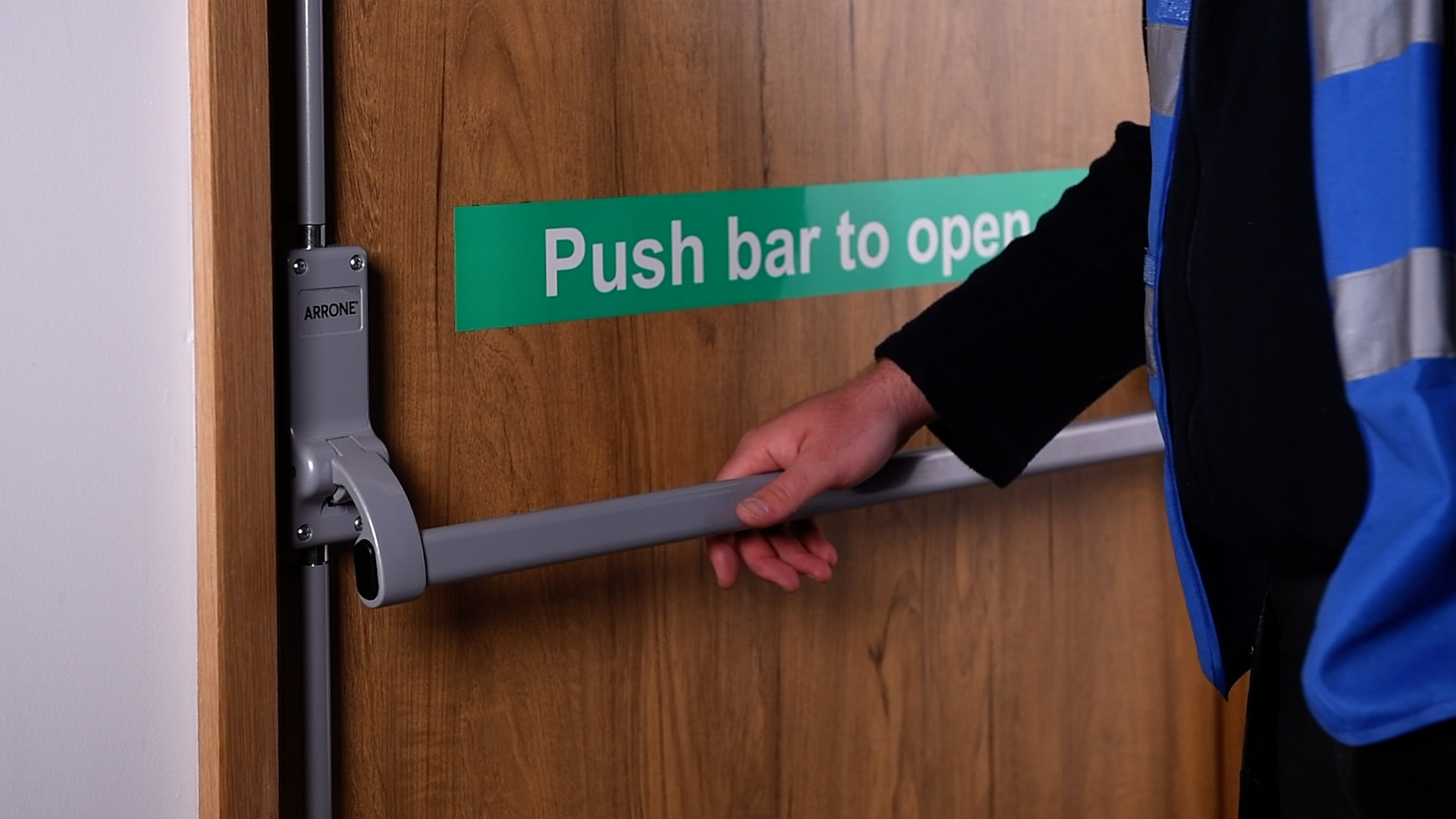
Arrone AR880 Single Panic Bolt
Retrofit and upgrades: more than a like-for-like swap
Replacing hardware is not simply a case of fitting the same product again. Changes in building use, regulations or environmental conditions can all mean a higher-grade or more durable finish is needed.
Air gaps, for example, are a common oversight. Excessive clearance between leaf and frame can seriously reduce fire, acoustic and security performance. BS 8214 recommends 2–4 mm for timber-based fire doors, and the gap should be checked as part of any retrofit.
Environments such as coastal locations or swimming pools demand higher corrosion resistance than standard stainless steel. Physical Vapour Deposition (PVD) coatings or marine-grade alloys can extend service life dramatically.
Meeting corporate ESG goals as well as green building certification requirements is now a key consideration in door hardware specification. When this is combined with proper maintenance, it maximises both performance and environmental value over the product’s lifecycle.
Specifying products with Environmental Product Declarations (EPDs), such as those manufactured by HOPPE (UK) and ARRONE, guarantees they possess verified data on their life-cycle environmental impact. EPDs are not yet compulsory in the UK but they may be in the future, and they are fast becoming part of the product specification decision making process.
A simple troubleshooting mindset
Whether during installation or a maintenance round, the same principle applies: identify the cause, not just the symptom.
If a door refuses to latch, is it a faulty lock – or a dropped hinge? If a handle feels loose, is the return spring worn, or are the fixings the wrong type?
Looking beyond the obvious saves time, money and repeat call-outs, while retaining compliance.
The long view
The best-performing door hardware is the result of three disciplines working together: correct product specification, competent installation, and planned preventative maintenance. Skimping on any of these almost guarantees problems later.
For facilities teams, contractors and anyone responsible for maintaining compliance and keeping a building’s doors in working order a proactive approach pays back many times over – not just in fewer breakdowns, but in maintaining the security, accessibility and compliance that good hardware is there to provide.