



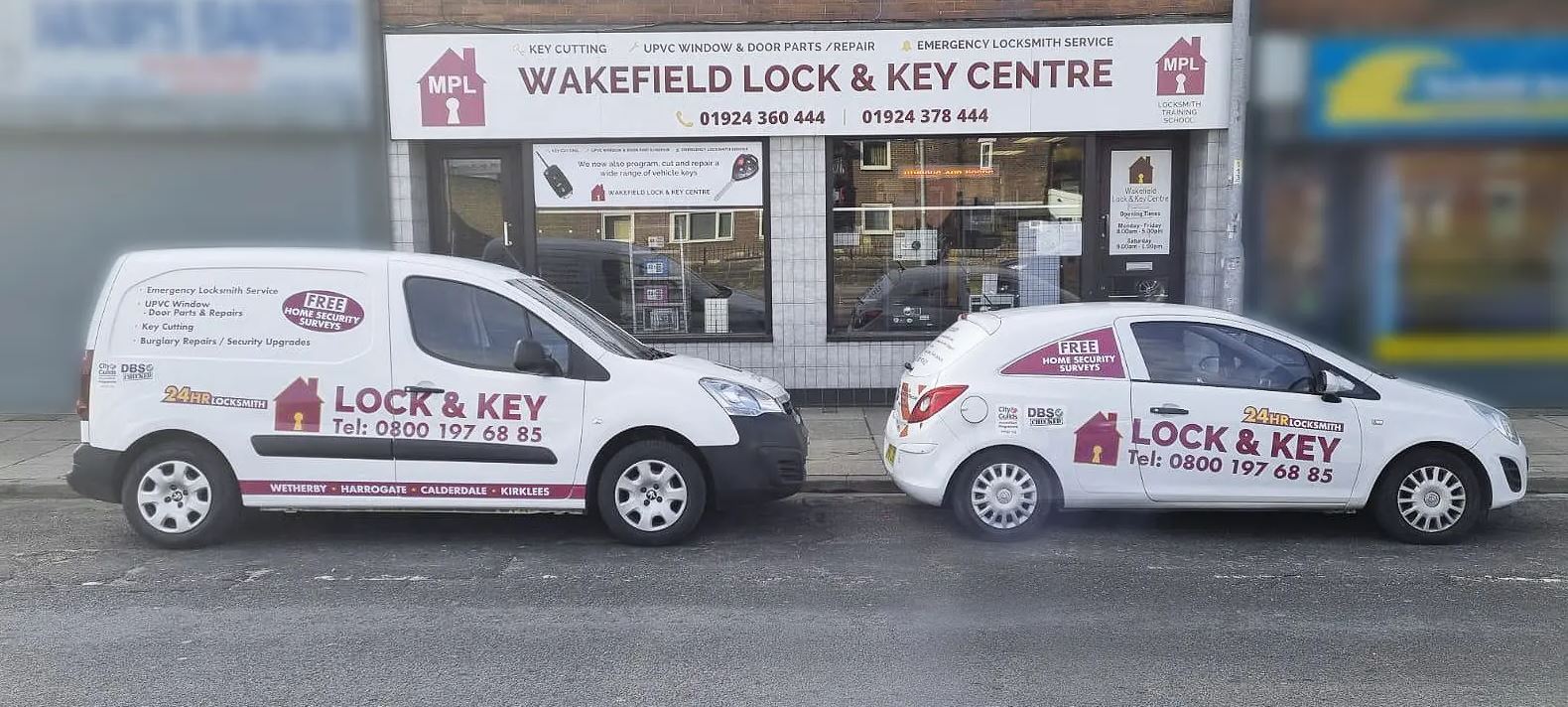
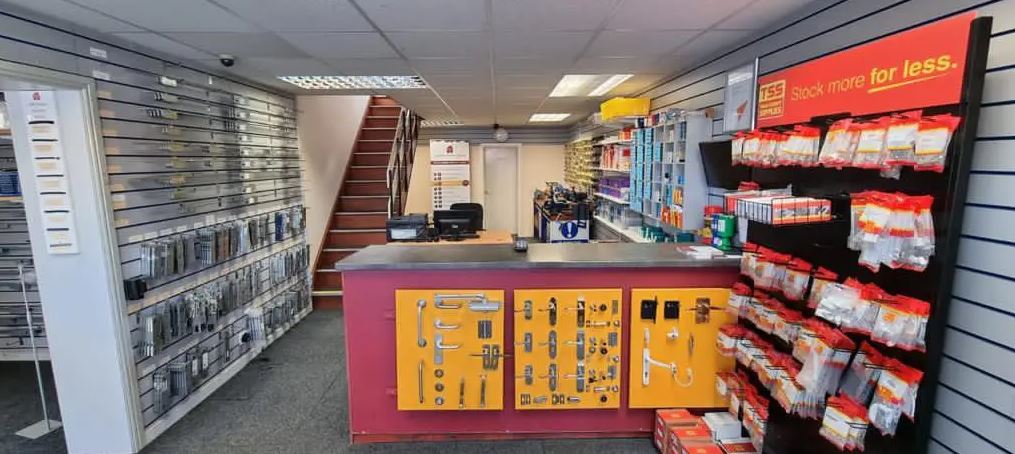
In an industry where margins are tight and competition is fierce, the ability to repair rather than replace has never been more valuable. At MultiPoint Locks (MPL), that philosophy sits at the heart of everything they do, from the specialist components on their trade counter shelves to the hands-on training delivered at their Wakefield centre.
In an interview with CEO Nicky England and Business Development Director Ethan Walker, one message is clear: locksmiths who have the skills to repair, possess the right tools and component knowledge, will keep more work in-house and improve profitability in the process.

The Growth of the Repair Market
Over the past decade, the repair sector has expanded significantly. Across the UK, thousands of uPVC and composite doors are now reaching the age where mechanisms begin to fail. In many cases, full replacement simply isn’t necessary.
“The goal is always to restore a door to full working order quickly and reliably,” says Nicky. “If you can identify the failed component and replace just that part, you save time and reduce costs for the customer.”
Modern locksmiths need access to multipoint gearboxes, keeps, handles, cylinders, alignment tools and specialist repair components. Crucially, repairs must be time-efficient, practical and dependable, especially when working under pressure on site, or while the customer is watching.
Multipoint Systems: The Identification Headache
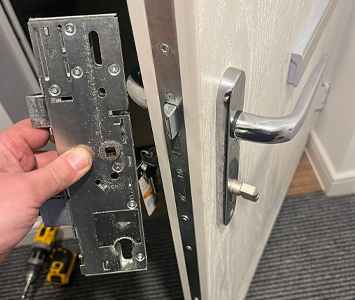
Ask any experienced locksmith about multipoint systems and they’ll say the same thing: externally similar doors can hide completely different internal mechanisms.
“One of the biggest challenges is the sheer number of different systems on the market,” Nicky explains.
“Two doors can look identical but have totally different internals.”
Add discontinued parts into the mix and the difficulty increases. Locksmiths are frequently asked to repair 10–20-year-old doors where original components are no longer readily available.
Door alignment further complicates diagnosis. Dropped out-of-line doors, frame movement and wear can all mimic gearbox failure. “You have to establish whether the issue is the mechanism, the door, or the installation,” Nicky says. “That’s where experience and methodical fault-finding matter.”

Mechanical Meets Digital
While traditional mechanical systems still dominate domestic work, electronic hardware is steadily increasing. Smart locks, access control integration and advanced cylinder security mean repairs may now involve both mechanical adjustment and basic electronic diagnostics.
“The future-proof locksmith needs both strong mechanical repair skills and an understanding of newer technologies,” says Nicky.
At the same time, higher-security cylinders and anti-snap designs have become standard. Keeping pace with evolving specifications is no longer optional.
Partnerships, Product Insight & Trusted Brands
Supporting this repair-focused approach is MPL’s close relationship with leading manufacturers including Winkhaus, ERA, Yale, Assa Abloy, Asec, Union and HOPPE.
MPL doesn’t just distribute these products, they use them within their training centre and gather feedback from real-world application. That practical testing allows the team to advise locksmiths on compatibility and installation efficiency, rather than relying purely on specification sheets. The same applies to tooling, with brands such as Souber Tools, UniV and Multipick forming part of the specialist range.
Looking ahead, MPL plans to expand its product portfolio further and is exploring the launch of its own branded tools. The company has also become a national distributor for the Fire Safety Stick, a compact 15-year shelf-life extinguisher suited to vans and workshops, reflecting a broader focus on practical trade support.
The Skills Gap: Diagnosis Over Trial & Error
If there’s one recurring theme in MPL’s experience, it’s the growing skills gap in fault diagnosis and product knowledge.
“Because the industry evolves so quickly, locksmiths can struggle to keep up with the variety of hardware available,” says Nicky. “Being able to correctly identify mechanisms and understand how they work is becoming a key skill that is required of a locksmith.
Ethan also echoes that view from a business development perspective. “The biggest difference we see between locksmiths who thrive and those who struggle is confidence in diagnosis. If you approach repairs methodically instead of relying on trial and error, you become more efficient and more profitable.”
As smart locking and vehicle security systems expand, electronic knowledge will become another essential skillset. Locksmiths who broaden their expertise now will be better positioned over the next three to five years.
Training Built Around Real Doors
Repair components alone are not enough. Without correct diagnosis, even the best-stocked van won’t guarantee a successful outcome. That’s where MPL Locksmith Training ties directly into the repair and maintenance offering. Courses focus heavily on real-world procedures, including:
● Identifying multipoint mechanisms
● Diagnosing gearbox failures
● Correcting door alignment issues
● Replacing individual components
● Understanding how different locking systems operate
“The aim is to help locksmiths approach repairs logically,” says Nicky. “Once you understand how the system works, you can pinpoint the root cause much faster.”
Ethan, who began his career as an apprentice on the MPL trade counter, believes that practical exposure is what sets the training apart. “There’s no death by Powerpoint, you’re working on real systems, and that’s what gives people the confidence to say yes to jobs.”

Looking Ahead: Repair Demand Is Only Growing
Over the next three to five years, MPL expects demand for repair and maintenance services to increase further. Ageing door stock, cost-conscious property managers and sustainability considerations all favour repair over potential door replacement.
“We expect to see more focus on efficient repairs rather than full replacements,” says Nicky. “For customers looking to keep costs down, repair is the most cost-effective option.”
At the same time, the “future-proof locksmith” will need hybrid knowledge; strong mechanical repair capability combined with an understanding of evolving electronic systems.
MPL is already expanding its training portfolio accordingly, including the launch of a new auto locksmith programming course designed to equip locksmiths with modern vehicle key and transponder programming skills.
“As vehicles become more advanced, demand for knowledgeable auto locksmiths continues to grow,” Nicky notes. “It’s about helping locksmiths future-proof their businesses.”
As Nicky reflects, the goal is simple: equip locksmiths not just with parts, but with confidence, and the ability to branch out into other areas such as auto locksmithing, because in today’s market, the real competitive edge lies in knowing how to say yes to jobs, and to repair if possible, not just replace. The Locksmith Journal gives the trade a space to share insights and challenges, and we’re proud to contribute by showing how repair, training, and the right tools can make a real difference.”
Need Parts? Tools? Want to Upskill? Here’s How to Reach MPL:
Training Centre: Monckton Road, Wakefield, WF2 7AN | 01924 693 293
Trade Counter: 31 Westgate End, Wakefield, WF2 9RG | 01924 378 444
www.multipointlocks.co.uk
www.locksmithtools.co.uk
www.mpl-locksmith-training.co.uk
More info
MultiPoint Locks (MPL) is a Wakefield-based specialist distributor and accredited locksmith training provider. Operating a purpose-built training centre, a long-established trade counter and a nationwide online store, MPL combines product supply with hands-on education and ongoing support.
Working with leading manufacturers and delivering practical, scenario-based training, the company supports independent locksmiths, housing providers and maintenance teams across the UK – helping them increase capability, improve diagnosis and keep more work in-house.