


In a profession where anyone can call themselves a locksmith, customers often have to make a judgement before you’ve even answered the phone.
They can’t see how many years you’ve spent developing your skills. They don’t know how many locks you’ve fitted, how many call-outs you’ve completed or how much experience you’ve built over time. They certainly can’t tell the difference between an experienced professional and one of the so-called “49ers” who have done so much damage to the reputation of our trade.
That’s where demonstrating your skills matters.
The MLA Qualification isn’t about questioning your experience. It’s about giving customers independent evidence of it.
Customers can’t see experience
Your experience helps you do the job. Demonstrating it helps you win it.
Reviews, recommendations and word of mouth all help build trust, but they only tell customers that someone was happy with the service they received.
A regulated qualification shows you’ve demonstrated the knowledge and practical skills expected of a professional locksmith through an independent assessment.
Together, your experience, reputation and qualification give customers greater confidence when deciding who to trust with their security.
Independent recognition matters
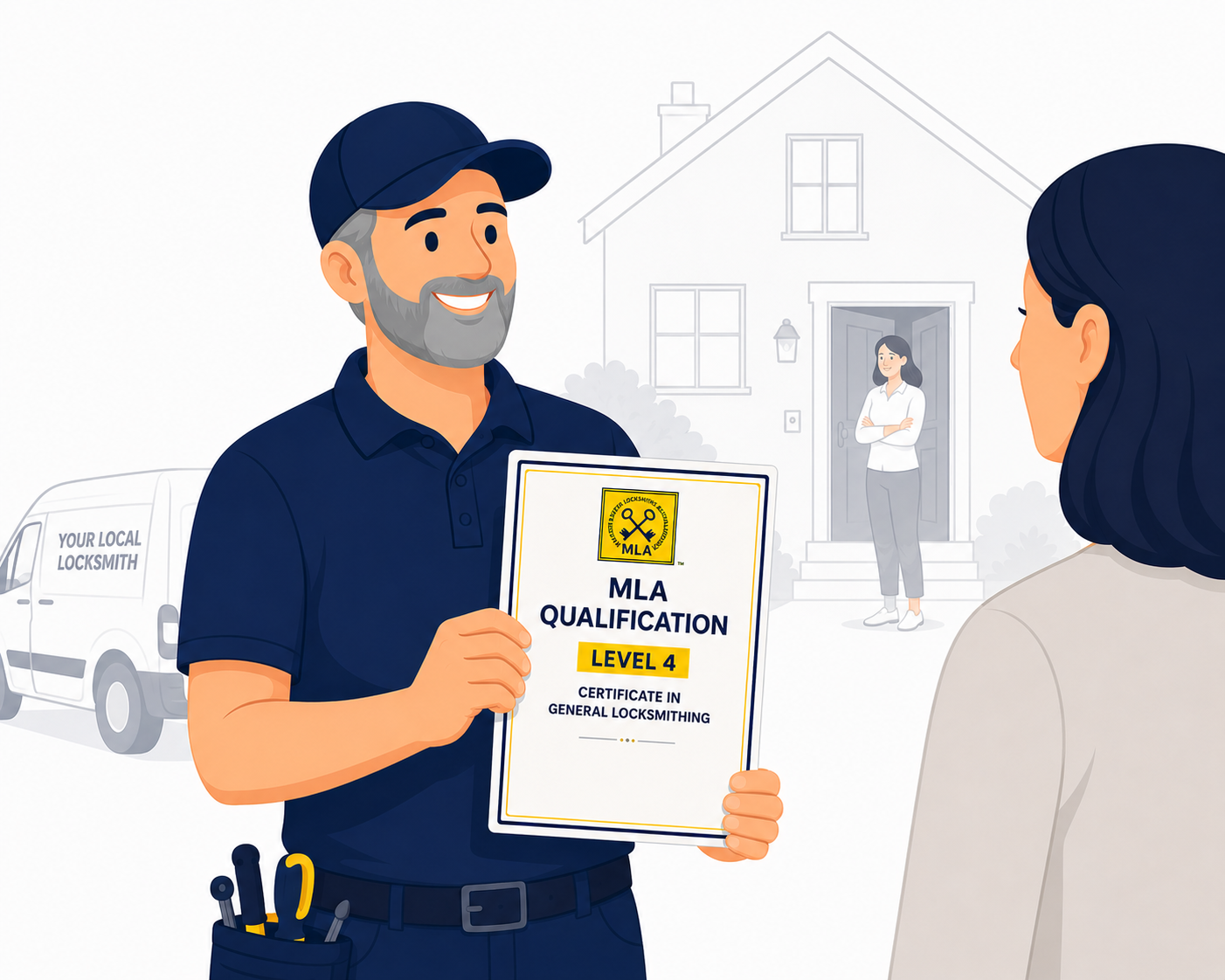
The MLA Qualification is the Level 4 Certificate in General Locksmithing. Awarded by ABBE and regulated by Ofqual, it has recognition beyond the locksmith industry.
In practical terms, that means customers don’t just have to take your word for it—or rely solely on reviews. They can have confidence that your knowledge and practical skills have been assessed through a nationally recognised, regulated qualification.
A Level 4 qualification sits above A Levels and is broadly comparable to the first year of higher education.
It shows you’ve demonstrated both practical skills and the knowledge needed to work professionally.
ABBE specialises in qualifications for the built environment and security sectors. Ofqual regulates qualifications in England to make sure they meet consistent national standards.
It’s independent recognition of the skills you’ve worked hard to develop—and another way to help customers choose with confidence.
What does the qualification assess?
The qualification focuses on the core practical skills every professional locksmith should be able to demonstrate.
Candidates complete practical assessments in lock opening, lock fitting and key cutting, alongside a written examination that tests the knowledge needed to support safe, professional locksmithing.
The qualification doesn’t focus on just one specialist skill. It assesses the core practical skills that form the foundation of day-to-day locksmithing.
Raising standards benefits everyone
Every locksmith who achieves the qualification helps strengthen the reputation of the profession.
The more customers understand the difference between a professional locksmith and someone who’s simply bought a set of tools and advertised online, the better it is for everyone.
Professional standards build trust. They protect the reputation of good locksmiths and help professional businesses stand out in a busy market.
Open to every locksmith
One of the biggest misconceptions is that you need to have trained with the MLA to gain the qualification.
You don’t.
The MLA Qualification isn’t a reward for attending MLA courses. It’s an independent assessment of competence.
However you’ve developed your skills, whether through years on the tools, another training provider or your own professional development, you can choose to demonstrate them through the qualification.
Preparing for success
Most successful candidates don’t simply revise for the qualification – they prepare through practical experience.
If, along the way, you’ve identified areas where you’d like to strengthen your knowledge or refresh particular skills, the MLA offers a range of training courses to help.
Courses include Level 2 Opening, Level 1 Fitting and the 2 Day Foundation Course, which covers key cutting. MLA members can also access written exam revision notes to support their preparation.
These courses aren’t designed to teach you how to pass an exam. They can help locksmiths strengthen any gaps in their knowledge or practical skills before deciding they’re ready to be assessed.
Once you feel ready, our Mock Qualification Day lets you experience the assessment process before taking the qualification. Run under exam conditions, it helps you understand what to expect, identify any final areas for improvement and approach the assessment with confidence.
Nothing replaces time on the tools, and the candidates who perform best are those who have invested in developing their skills through real-world practice.
Ready to demonstrate your skills?

You’ve invested time, effort and years of practical experience in becoming the locksmith you are today.
The MLA Qualification isn’t about questioning that experience. It’s about giving customers an independently recognised way to see it.
Your experience helps you do the job. Demonstrating it helps customers choose you.
Scan to find out more about the MLA Qualification
The Nigel Rose Award
Each year, the candidate achieving the highest overall marks in the MLA Qualification is awarded the prestigious Nigel Rose Award. Named in honour of Nigel Rose, it recognises the highest-performing candidate of that qualification year.
MLA Qualification: Key Facts
What is it?
A nationally recognised Level 4 Certificate in General Locksmithing.
Who is it for?
Any locksmith who wants to demonstrate their skills against a nationally recognised standard.
Do I need to have trained with the MLA?
No. However you’ve developed your skills, you can take the qualification.
Do I need to be an MLA member?
No. Anyone can take the qualification. If you’re an MLA member and successfully complete it, you’ll become a Qualified Master Locksmith (QML) member. If you’re not yet a member, you can still achieve the qualification. This can also support an application for MLA Approved Company status, should you wish to apply.
Can the MLA help me prepare?
Yes. We offer a range of training courses, as well as a Mock Qualification Day and written exam revision notes for MLA members.
Who awards it?
ABBE – Awarding Body of the Built Environment
Who regulates it?
Ofqual – The Office of Qualifications and Examinations Regulation, regulates qualifications, examinations and assessments in England.
However you’ve developed your skills, the assessment is the same. Whether you’ve learned through years on the tools, another training provider or MLA courses, the qualification assesses every candidate against the same nationally recognised standard.